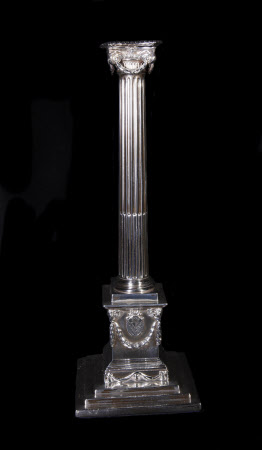
Candlestick
George Cowles
Category
Silver
Date
1771
Materials
felt, wood & silver
Measurements
355 x 122 x 122 mm
Place of origin
England
Order this imageCollection
Kedleston Hall, Derbyshire
NT 108941
Caption
had fled to London from France to escape religious persecution. Louisa Perina Ogier came to England as a baby after her father, a silk weaver, moved as a refugee to Spitalfields, the area of London most closely associated with the production of sumptuous silk cloth. It was her marriage to Samuel Courtauld (1720–65), a second-generation goldsmith from one of the most acclaimed families in the trade, that established Louisa’s connection to the business. Courtauld was in her mid-thirties when, following the death of her husband, she took control of the family firm, as many widows then did. Unlike the many anonymous women who were involved in goldsmithing as workers or suppliers, Courtauld’s prominent role as a wealthy businesswoman means that her contribution to the trade is more easily recognised today. A 1768 bill describes Courtauld as a ‘jeweller, goldsmith &c.’ based at 21 Cornhill, opposite the Royal Exchange. During her early years in business she had pieces marked with her own initials ‘LC’ in a lozenge-shaped punch, indicating her status as a widow. She later registered a mark with her business partner, George Cowles (d.1811), and another with her son Samuel (1752–1821). This meant that every piece of silver to come out of Courtauld’s workshops was stamped with her initials – and she would be held legally accountable for any deficiencies, particularly if the purity of the metal was not up to standard. Courtauld dealt personally with retailers, as well as with her royal and noble clients. The goods produced in her workshops were of a remarkably high quality and responded to the latest fashions. Her clients included Sir Nathaniel Curzon of Kedleston (1726–1804), who ordered a remarkable set of three condiment vases based on Greek vases published by the antiquarian William Hamilton, a set of tea canisters with a sugar vase, an argyll (gravy warmer) and other pieces in the fashionable Neoclassical style. In 1777 Curzon settled his account with Courtauld, which then amounted to £142 3s 6d (over £12,000 today).
Summary
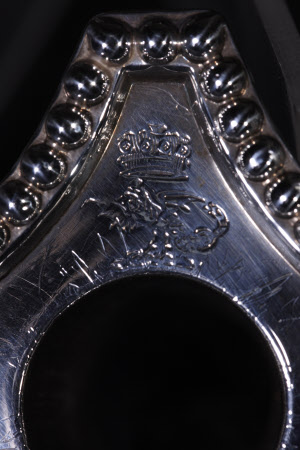
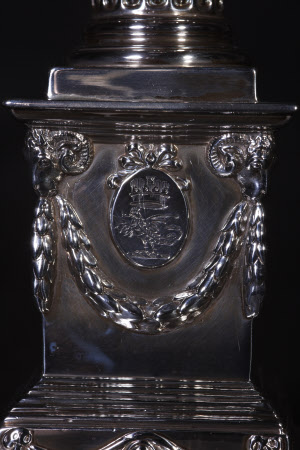
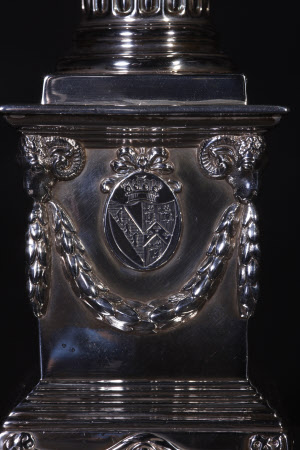
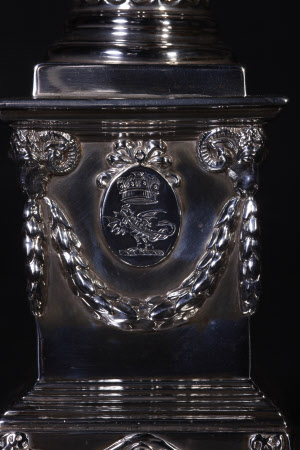
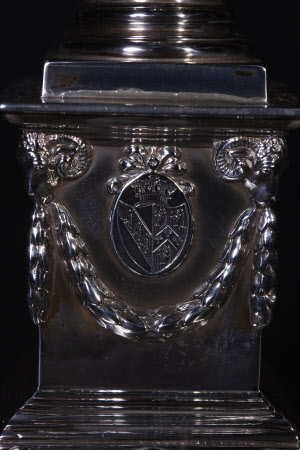
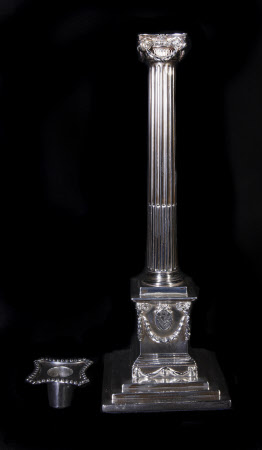
A set of four fluted ionic column candlesticks on square altar-shaped plinths, chased with rams' masks, laurel and drapery festoons, on stepped bases. Made in 1771 by Louisa Courtauld and George Cowles.
Provenance
Gifted to the National Trust in 1986 by Francis Curzon, 3rd Viscount Scarsdale (1924-2000).
Marks and inscriptions
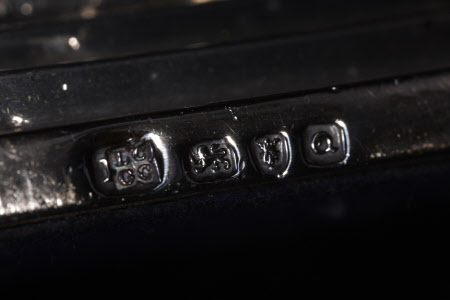
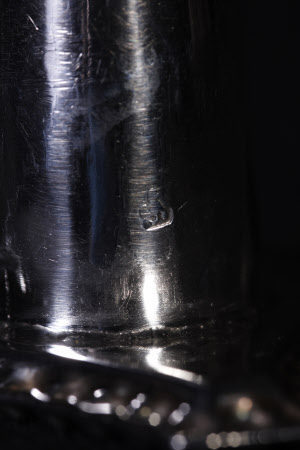
LC GC (makers' mark, stamped, side of base, text [other hallmarks also here])
Makers and roles
George Cowles, silversmith Louisa Perina Courtauld (c.1729 - 1807), silversmith
References
Conroy, Rachel, Women Artists and Designers at the National Trust, 2025, pp. 70-71