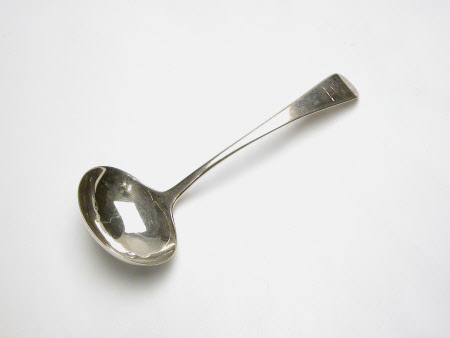
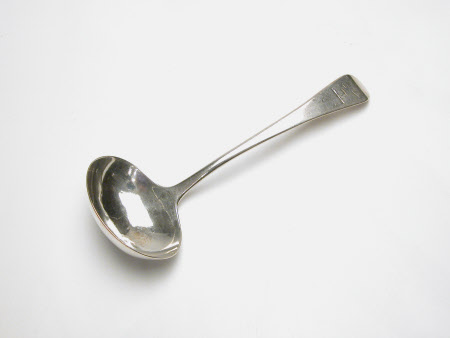
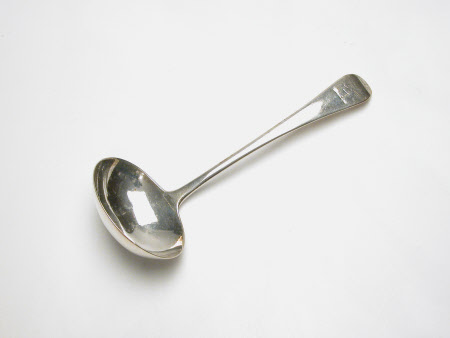
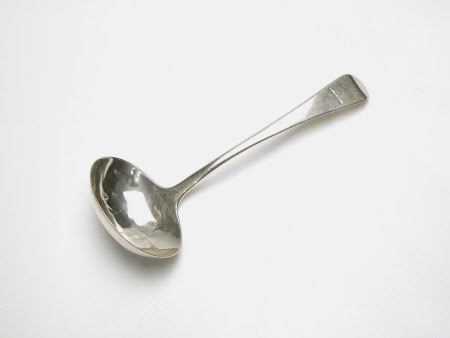
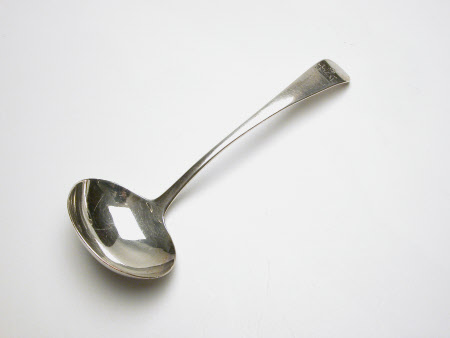
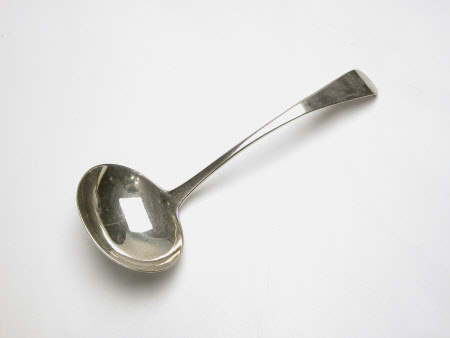
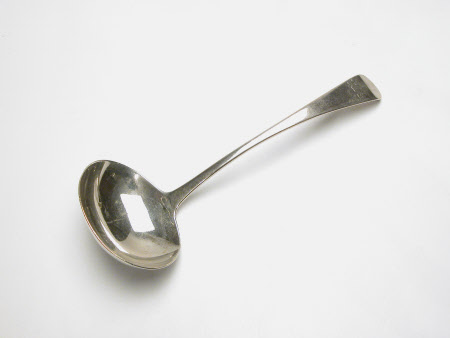
Seven sauce ladles
Category
Silver
Date
1807 - 1813
Materials
Sterling silver
Order this imageCollection
Saltram, Devon
NT 872312.1
Summary
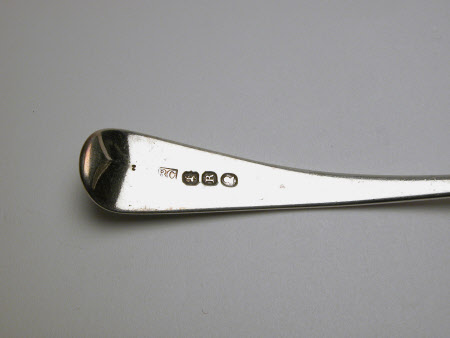
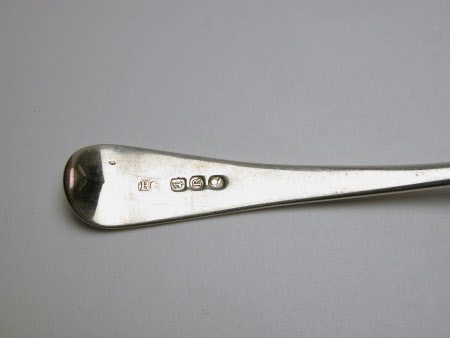
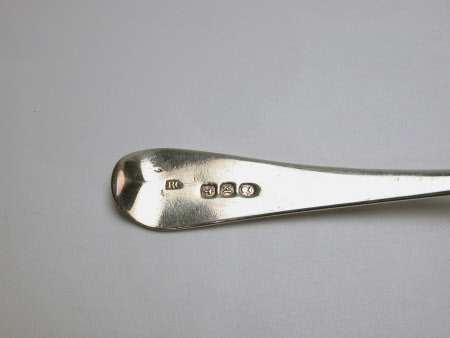
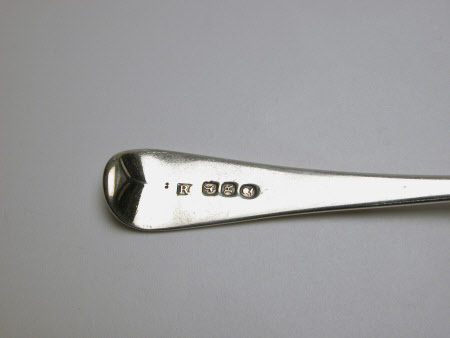
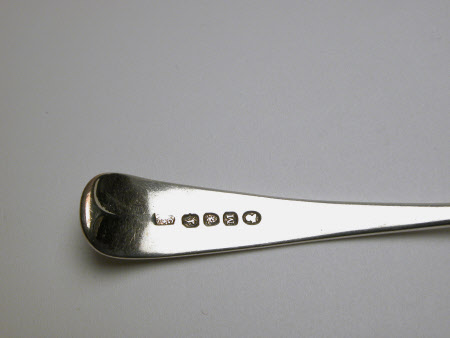
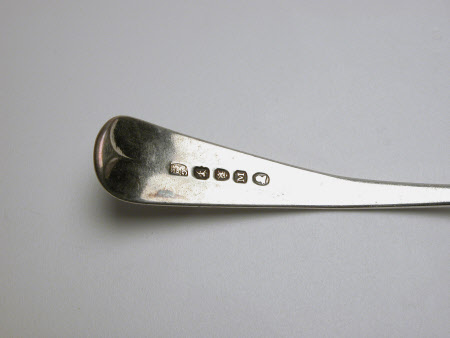
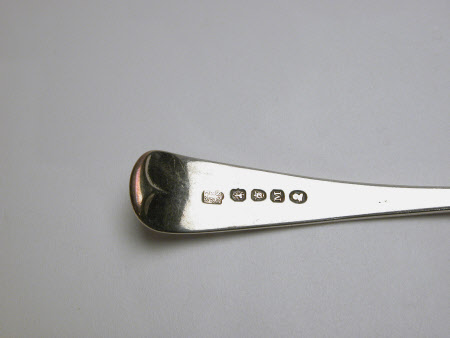
Seven sterling silver sauce ladles with oval bowls from a composite Old English pattern service, three by S. Godbehere and Co., London, 1807/8 and four by Richard Crossley, London, 1812/13 HALLMARKS & HERALDRY Three are marked on the reverse of the terminal with the maker's mark SG over EW over IB for for Samuel Godbehere and Company (Arthur Grimwade, London Goldsmiths (1990), no. 2517), sterling lion, leopard's head crowned, date letter 'M' for 1807/8 and monarch's head facing right. The front of each terminal is engraved with the crest of a lion couchant holding up a cross patonce with its right paw for John (d. 1850) and Sophia (d. 1834) Dickins, uncle and aunt of Harriet Newcombe (1788-1877), Mrs Montagu Edmund Parker. Four are marked on the reverse of the terminal with the maker's mark RC in a rectangular punch for Richard Crossley (Grimwade, no. 2517), sterling lion, date letter 'R' for 1812/13 and monarch's head facing right. The front of each terminal is engraved with the Parker crest of an arm with a stag's antler in hand for Montagu Edmund Parker (1778-1831).
Full description
For further general information on the complete service see the master entry. These sauce ladles formed part of the silver of the Parkers of Whiteway in Devon, a branch founded by the 1st Lord Boringdon's brother, the elder Montagu Edmund Parker (1737-1813). In the 1880 Whiteway plate list (NT, Saltram) fifteen sauce ladles were listed which would have included these. The four bearing the Parker crest must have been commissioned by the younger Montagu Edmund Parker (1778-1831) whilst the three with the Dickin crest probably passed to his wife Harriet Newcombe (1788-1877), probably on the death of her aunt, Sophia Dickin (nee Pleydell), in 1834. They are not amongst the silver bequeathed to her by her uncle, John Dickin (d. 1850), and listed in his will (The National Archives, PROB 11/2112/461, proved 8 May, 1850), none of which seems to survive at Saltram. Sophia Dickin may well have inherited the sauce ladles along with other silver (see 872312.7 and 872345-7) as part of the bequest detailed in the will of her sister, Miss Elizabeth Pleydell (TNA, PROB 11/1801/362, proved 8 Jun 1832), the Dickin crest being added thereafter. The Whiteway silver descended to Harriet Parker (1809-97), wife of the 2nd Earl of Morley, and became united with that of Saltram following her death in 1897. James Rothwell, National Curator July 2025
Provenance
Three of 1807/8 possibly Miss Elizabeth Pleydell (d. 1832); her sister Sophia Dickin (d. 1834); their niece, Harriet Newcombe, Mrs Montagu Edmund Parker (1788-1877); her daughter, Harriet Parker, Countess of Morley (1809-97). Four of 1812/13 Montagu Edmund Parker (1778-1831); his son Montagu Edmund Newcombe Parker (1807-58); his sister, Harriet Parker, Countess of Morley (1809-97). All seven then by descent to Montagu Brownlow Parker, 5th Earl of Morley (1878-1962); accepted by HM Treasury in lieu of full payment of Estate Duty from the Executors of Edmund Robert Parker, 4th Earl of Morley (1877-1951) and transferred to the National Trust in 1957.
Credit line
Saltram, the Morley Collection (National Trust)