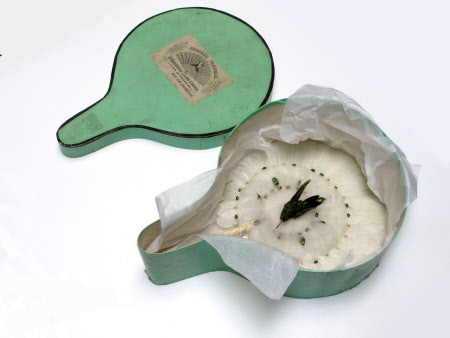
Fan box lid
Category
Ephemera
Date
1880
Materials
Cardboard
Measurements
000 mm (W); 360 mm (Length)
Place of origin
Rio de Janeiro
Order this imageCollection
Tyntesfield, North Somerset
NT 18632.3
Caption
The world of European fashion has long been enchanted by materials and commodities from the natural realm. Towards the end of the 19th century, almost every fashionable woman wore some kind of fur or feather to embellish or enhance their clothing. This fixed fan would have been taken along to special events or parties, the perfect accessory to any elegant gown or outfit. Every material used in the creation of this fan – the turned ivory handle, the gem-like beetles and the delicate iridescent stuffed hummingbird – represents a trade founded on the exploitation of millions of animals. Ivory, plumage and insects were considered desirable curiosities; transforming them into accessories and garments turned their wearer into a vessel of the exotic. Colonised countries and trading partners across the world were mined for their most beautiful and rare species, with hundreds of thousands of birds being slaughtered every year to adorn hats, fans and dresses. Fans such as this often came from Brazil, which dominated the trade. Helen Antrobus
Summary
Mint green cardboard box lid to fit fan box (NT18632.4).
Provenance
Purchased from the estate of the late Lord Wraxall with the assistance of the NHMF and donations from members and supporters.
Marks and inscriptions
/ FEATHER FLOWERS / DOMINGOS LDE CUNHA / 14 RUA DA ASSEMBLEA / RIO DE JANEIRO /
References
Antrobus and Slocombe 2025: Helen Antrobus and Emma Slocombe, 100 Things to Wear: Fashion from the collections of the National Trust, National Trust 2025, pp. 128- 129.