You searched , Maker: “Arthur Tilney Bassett

Show me:
and
Clear all filters

  • Explore
  • Explore
  • Explore
  • Explore
  • Explore
  • Explore
  • Explore
  • Explore
  • Explore
  • Explore
  • Explore
  • Explore
  • Explore
  • Explore
  • Explore
  • Explore
  • Explore
  • Explore
  • Explore
  • Explore
  • Explore
  • Explore
  • Explore
  • Explore
  • Explore
  • Explore
  • Explore
  • Explore
  • Explore
  • Explore
  • Explore
  • Explore
  • Explore
  • Explore
  • Explore
  • Explore
  • Explore
  • Explore
  • Explore
  • Explore
  • Explore
  • Explore
  • Explore
  • Explore
  • Explore
  • Explore
  • Explore
  • Explore
  • Explore
  • Explore
  • Explore
  • Explore
  • Explore
  • Explore
  • Explore
  • Explore
  • Explore
  • Explore
  • Explore
  • Explore
  • Explore
  • Explore
  • Explore
  • Explore
  • Explore
  • Explore
  • Explore
  • Explore
  • Explore
  • Explore
  • Explore
  • Explore
  • Explore
  • Explore
  • Explore
  • Explore
  • Explore
  • Explore
  • Explore
  • Explore
  • Explore
  • Explore
  • Explore
  • Explore
  • Explore
  • Explore
  • Explore
  • Explore
  • Explore
  • Explore
  • Explore
  • Explore
  • Explore
  • Explore
  • Explore
  • Explore
  • Explore
  • Explore
  • Explore
  • Explore
  • Explore
  • Explore
  • Explore
  • Explore
  • Explore
  • Explore
  • Explore
  • Explore
  • Explore
  • Explore
  • Explore
  • Explore
  • Explore
  • Explore
  • Explore
  • Explore
  • Explore
  • Explore
  • Explore
  • Explore
  • Explore
  • Explore
  • Explore
  • Explore
  • Explore
  • Explore
  • Explore
  • Explore
  • Explore
  • Explore
  • Explore
  • Explore
  • Explore
  • Explore
  • Explore
  • Explore
  • Explore
  • Explore
  • Explore
  • Explore
  • Explore
  • Explore
  • Explore
  • Explore
  • Explore
  • Explore
  • Explore
  • Explore
  • Explore
  • Explore
  • Explore
  • Explore
  • Explore
  • Explore
  • Explore
  • Explore
  • Explore
  • Explore
  • Explore
  • Explore
  • Explore
  • Explore
  • Explore
  • Explore
  • Explore
  • Explore
  • Explore
  • Explore
  • Explore
  • Explore
  • Explore
  • Explore
  • Explore
  • Explore
  • Explore
  • Explore
  • Explore
  • Explore
  • Explore
  • Explore
  • Explore
  • Explore
  • Explore
  • Explore
  • 1 items Explore
  • Explore
  • Explore
  • Explore

Select a time period

Or choose a specific year

Clear all filters

Johannes Woverius (Jan van den Wouwer) (1576-1636)

attributed to Sir Anthony Van Dyck (Antwerp 1599 - London 1641)

Category

Art / Oil paintings

Date

c. 1626 - 1636

Materials

Oil on panel

Measurements

620 x 480 mm

Place of origin

Flanders (Belgium from 1830)

Order this image

Collection

Belton House, Lincolnshire

NT 436106

Caption

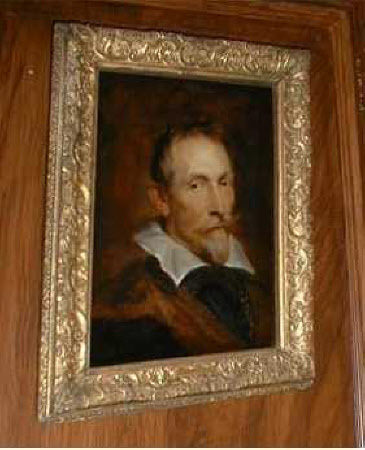
Jan van den Wouwer, or ‘Woverius’ was the financial Counsellor to Archduke Albert, the Governor of the Spanish Netherlands, and a friend of Rubens, who had earlier included him with himself and his brother, Philip and Justus Lipsius, in his group portrait of The Four Philosophers’ (now in the Palazzo Pitti, Florence). This portrait was bought by Sir Henry Bankes in 1754 as a Van Dyck, but it is not certainly by him. It relates more closely to Van Dyck's bust-format etching for his ‘Iconography’, than to the half-length portrait in the Pushkin Museum, Moscow.

Summary

Oil painting on oak panel, Johannes Woverius (Jan van den Wouwer) (1576-1636), attributed to Sir Anthony Van Dyck (Antwerp 1599 - London 1641), c. 1626-36. A head-and-shoulders portrait of a man, turned to the right, gazing at the spectator, in a black doublet with fur lined coat, gold chain and white collar. Reverse of panel with the remnant of an Antwerp brand mark from the Guild of Saint Luke, partially showing the two hands and the castle. The branding of panels after inspection by the dean of the Guild became law through an ordinance issued by the Antwerp authorities on 11 December 1617 (Dr Justin Davies, Dendrochronological analysis report, Jordaens Van Dyck Panel Paintings Project, 2021). Wouwer was a friend of Rubens and Financial Counsellor to the Governor of the Spanish Netherlands, Archduke Albert of Austria and formed part of the humanist circle of students of the Flemish philosopher, Justus Lipsius, both of whom feature in Rubens's 1611 painting of the 'Four Philosophers' in the Palazzo Pitti, Florence.

Provenance

Bought by Sir Henry Bankes (1711-1774) in 1754 as a Van Dyck; purchased with a grant from the National Heritage Memorial Fund (NHMF) from Edward John Peregrine Cust, 7th Baron Brownlow, C. St J. (b.1936) in 1984.

Credit line

Belton House, The Brownlow Collection (acquired with the help of the National Heritage Memorial Fund by the National Trust in 1984)

Makers and roles

attributed to Sir Anthony Van Dyck (Antwerp 1599 - London 1641), artist

View more details